

The short answer: there are waves in Sayulita all year. For beginners, the best time is usually a session around mid to low tide, on a day with manageable swell. The month matters less than you’d think. The tide, the wind and the size of the swell on the day matter more.
Below, we go through the time of day, the tides, and what each part of the year tends to bring, so you can plan your trip and your surf lessons in Sayulita with a realistic idea of what to expect.

The best time of day: it depends on the day
Mornings are often a good time to surf in Sayulita. The wind tends to be lighter, the waves cleaner, and there are fewer people in the water. That’s why many of our lessons happen in the morning.
But not always. Some days, the tide and the swell line up better in the afternoon, and that’s when we’ll teach. The ocean changes every day, so we don’t follow a fixed rule. We check the conditions the day before and pick the window that will give you the best chance to learn.
If you have a preference for morning or afternoon, let us know when you book and we’ll take it into account.
How tides change the waves
Tides have a big effect on Sayulita’s waves, and different parts of the beach react differently.

The beginner area
For first-time surfers, we teach in the beginner zone on Sayulita beach, which has a sandy bottom.
Mid to low tide usually works best here. The waves break over a longer distance, which gives you more time to paddle, pop up and get your timing right. Learning feels calmer and less rushed.
The main breaks: left and right
Sayulita also has two main breaks, the left and the right. Both have a rocky bottom and are better for advanced beginners and experienced surfers.
At low tide, we avoid both. On the right, the rocks are more exposed and there’s a higher chance of cuts or stepping on sea urchins. The left gets very shallow and rocky.
At mid to high tide, the right can sometimes work for stronger beginners under supervision. At high tide, though, the waves often get softer and break closer to shore, which can make them harder to catch.
Why we check every day
Tides shift every day, so the best time to surf shifts with them. For beginners, we choose the safest and most forgiving window. For more advanced surfers, we may change the location depending on what the ocean is doing. Our instructors check the tide charts and conditions daily before setting each lesson.
Sayulita surf, month by month
This is what each time of year typically brings. The ocean doesn’t read calendars, so any month can surprise you.
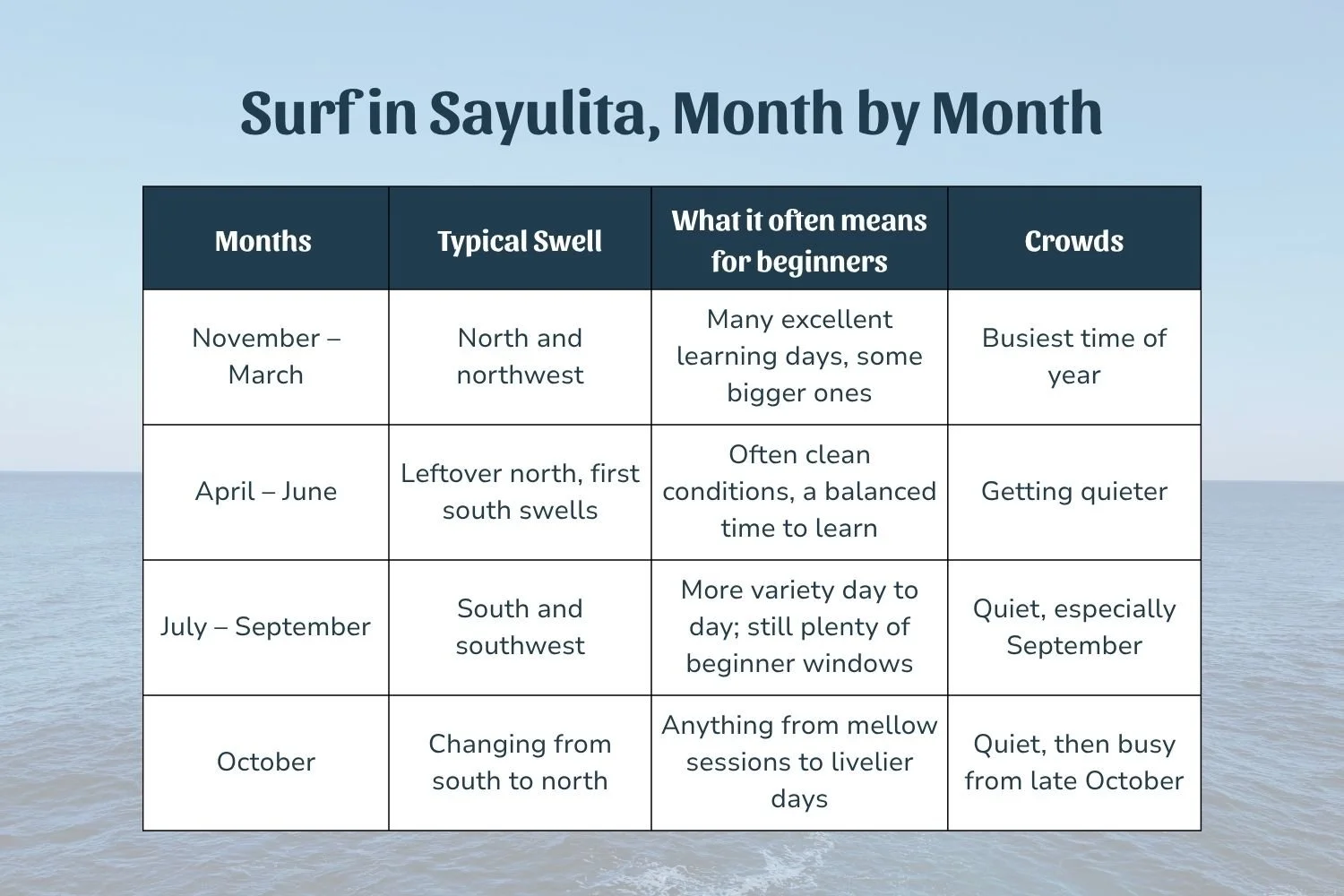
Planning a specific month? Read our guides to surfing in Sayulita in November, in December, and in February and March.
Winter (November to March)
Winter usually brings north and northwest swells. They can create very clean, well-organized waves, especially in the mornings. They can also bring more size and power on some days, so winter is not small every day.
For beginners, many winter days are excellent for learning. Some will feel more energetic, and on those days, picking the right tide matters even more.
If you’re coming in February or March, we wrote a separate guide to surfing Sayulita in February and March.
Spring (April to June)
Spring often brings a mix of leftover north swell and the first south swells. Mornings can be very clean, and the crowds start to thin after the high season. For many beginners, this is a nicely balanced time to learn.
Summer (July to September)
Summer brings more south and southwest swell. Some days are bigger and more powerful, especially at the main breaks. There are still plenty of good windows for beginners, as long as the tide is right and you stay in the learning zone. Expect conditions to change more from one day to the next.
Fall (October)
October is a turning point between the south and north swell seasons. You might get quiet, mellow mornings, or livelier days when a swell comes through. As in every month, the tide and wind matter more than the date.

When La Lancha is the better choice
Many visitors don’t know that about 25 minutes south of town, past a short walk through the mangroves, there’s another beach that’s great for learning: La Lancha.
La Lancha is a good option when:
Sayulita beach feels busy
You’d like a quieter setting
You want longer, more evenly spaced waves
Many beginners find surf lessons at La Lancha easier, because the waves often roll in more gently and there’s more space to practice. We also run a La Lancha surf trip, with transport included.
Not sure which beach suits you? We’ll recommend one based on your preferences.

La Lancha Beach
So, when should you go?
For most beginners, the best time to surf is a session around mid to low tide, on a day with manageable swell. Often that’s in the morning, sometimes it’s the afternoon. More than any month, the best time is when the conditions match your level, and that changes daily. That’s why we look at the ocean every day before we teach.
Book your surf lesson in Sayulita
Planning a quieter day? See La Lancha surf lessons
